Twenty-eight edge profiles in common use across the luxury stone industry, organised into eight families. Cross-section diagrams, descriptions, and when to specify each. The reference designers and architects can link to from spec sheets.
The edge profile of a stone piece is the silhouette of its visible edge in cross-section. For a kitchen counter, it is the shape of the front edge as you look at it from across the room. For a vanity, it is the outline of the front lip. For a wall-mounted shelf, it is the visible thickness as you stand beneath it. The profile choice changes how the stone reads visually, how it feels to the hand, and how light catches it; it can shift a piece from architectural to decorative, traditional to contemporary, restrained to dramatic, with no other change to the underlying material.
This reference covers the twenty-seven profiles in standard commercial production at most luxury stone fabricators globally. The naming conventions follow the standard North American stone industry vocabulary; some profiles have alternate names in European or Asian markets. Pietra fabricates all twenty-seven profiles on request; some are stocked as standard options on our Archway and Bath product lines, others are bespoke specifications.
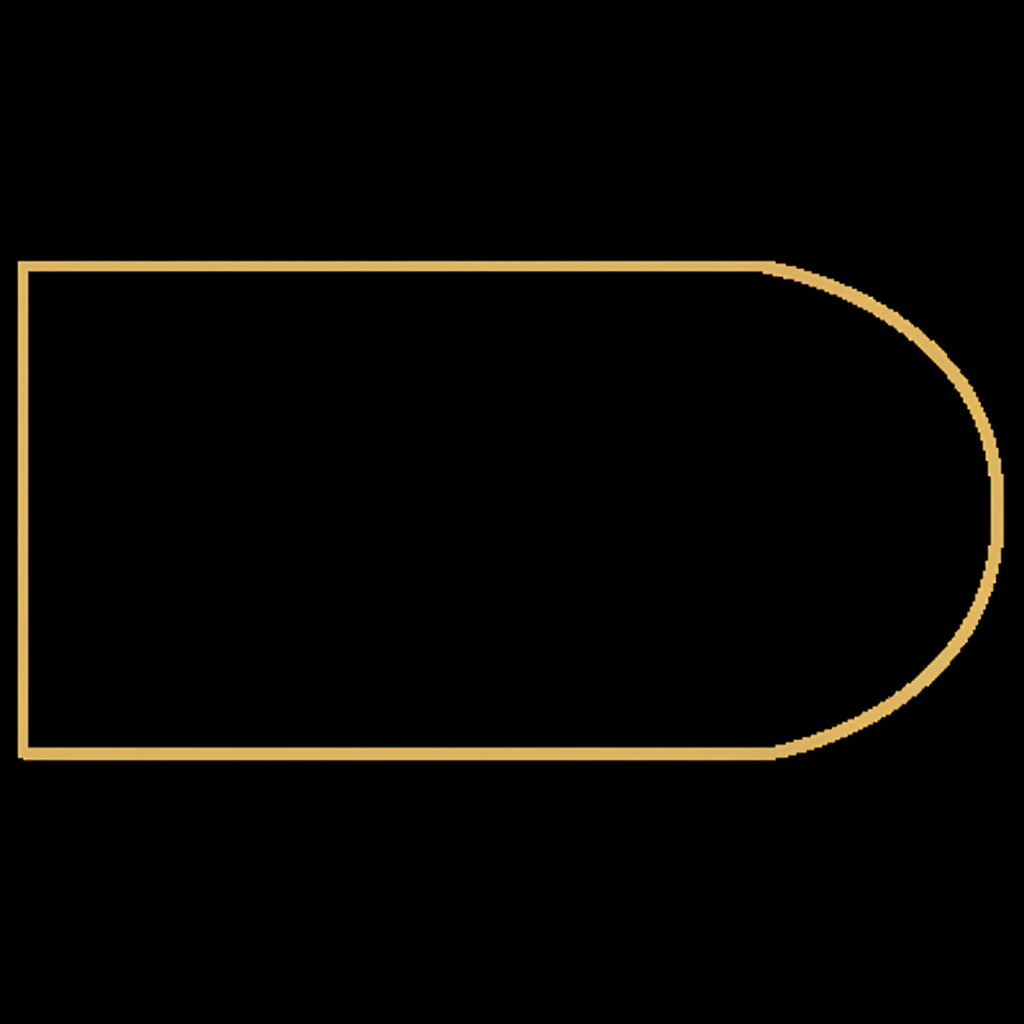
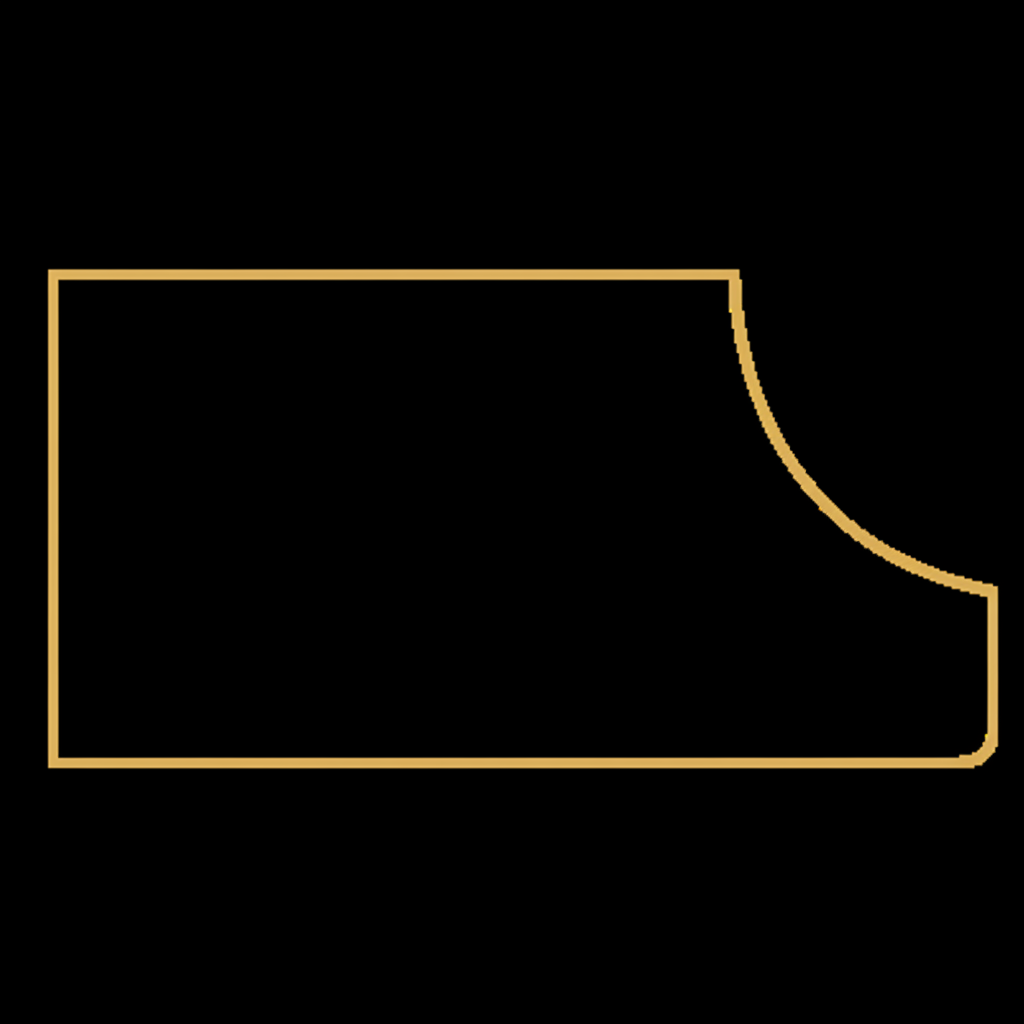
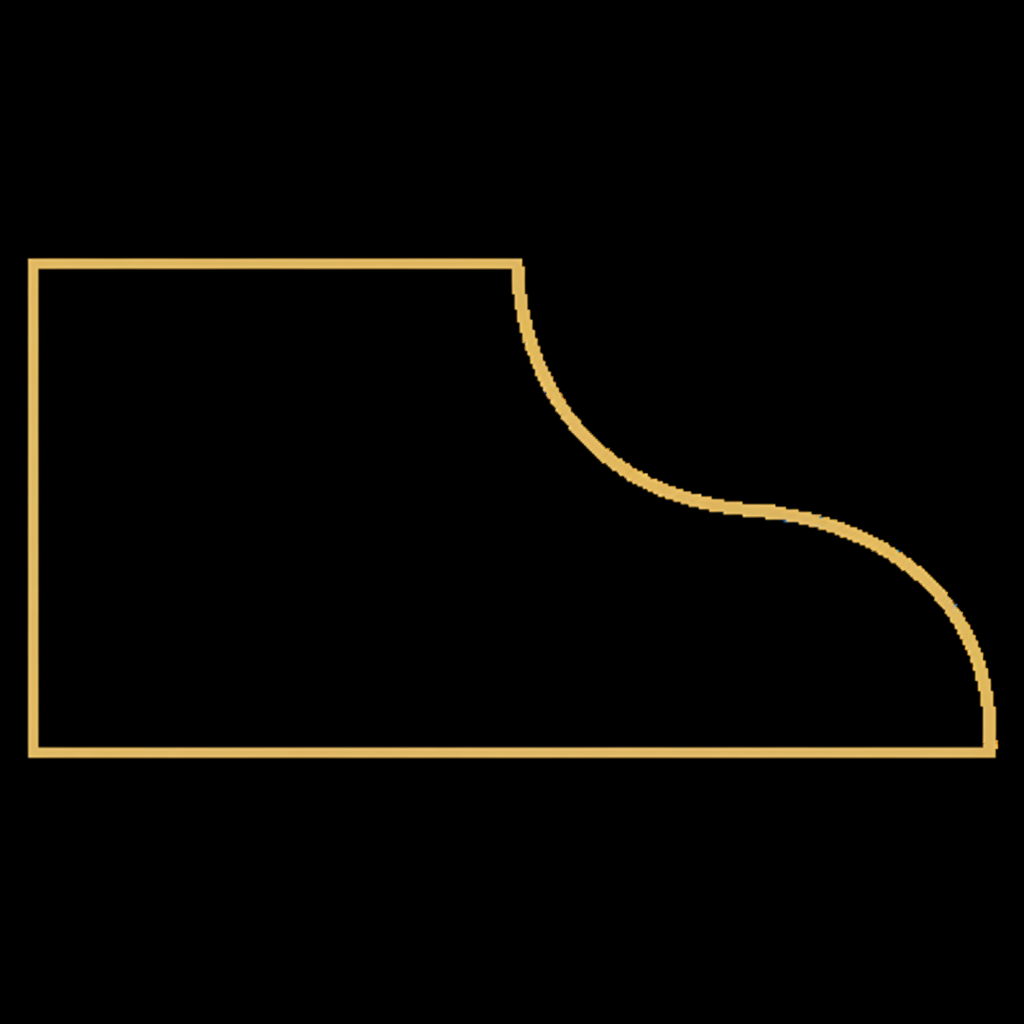
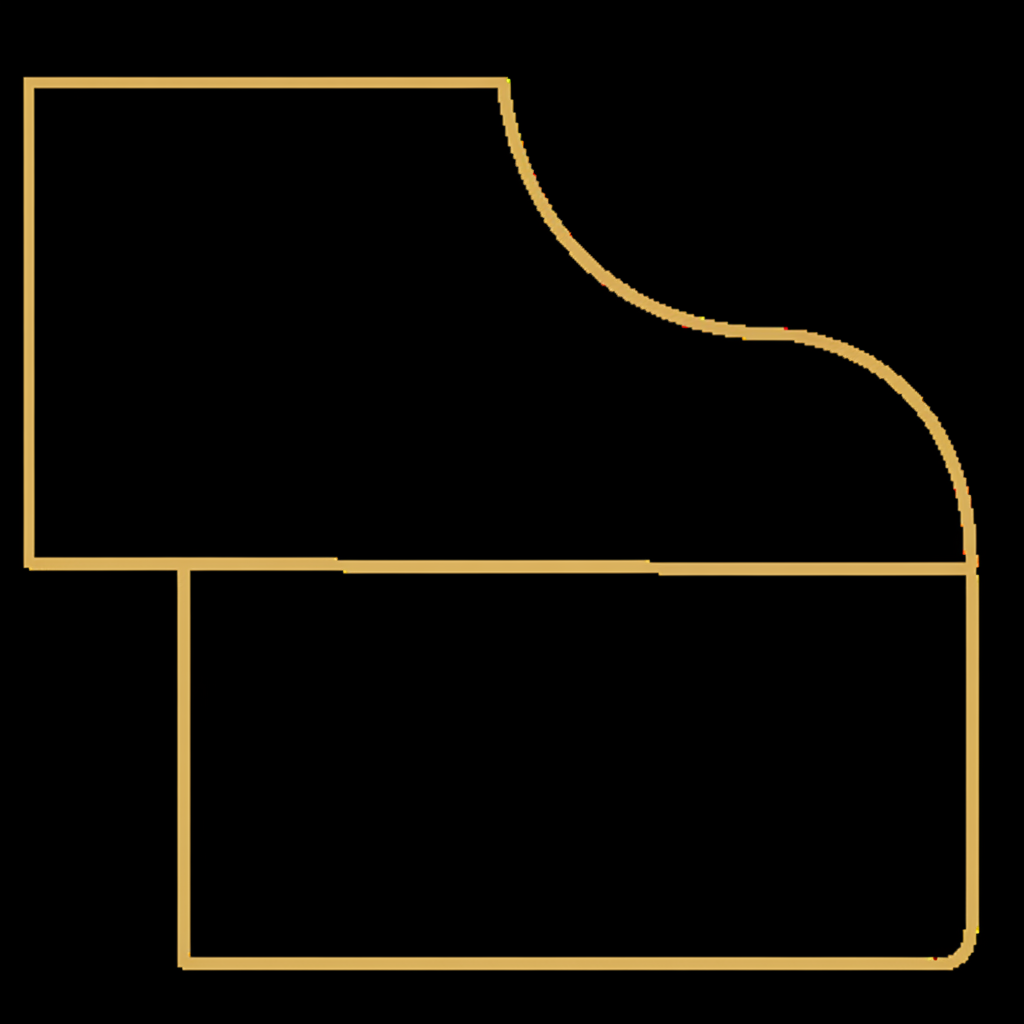
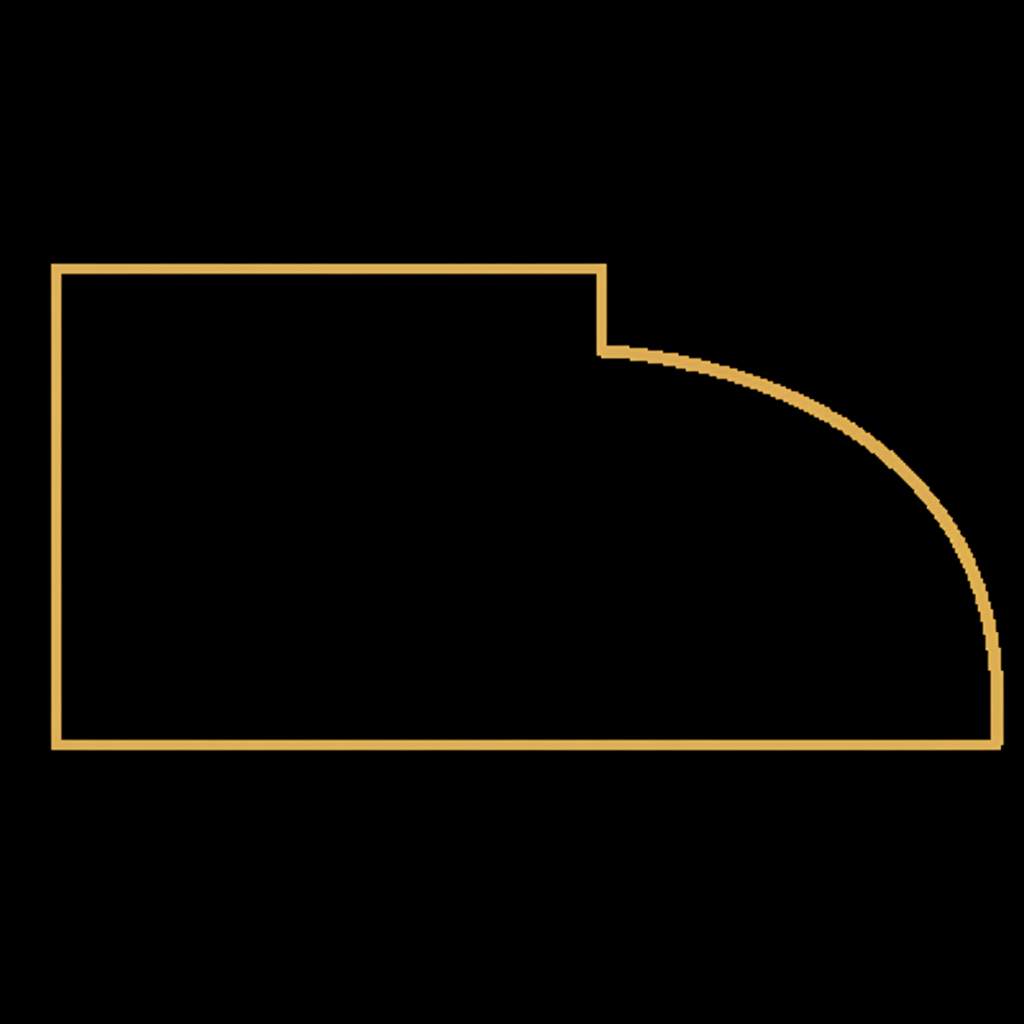
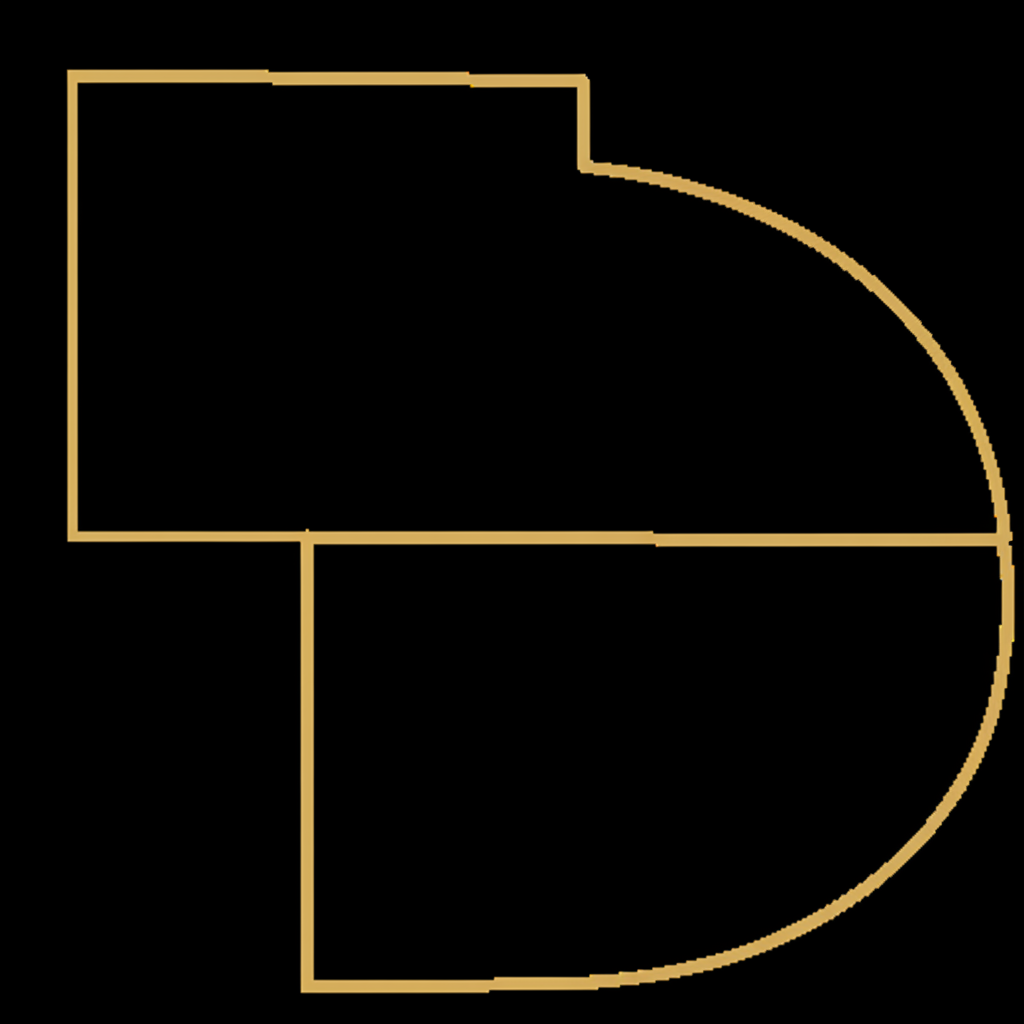
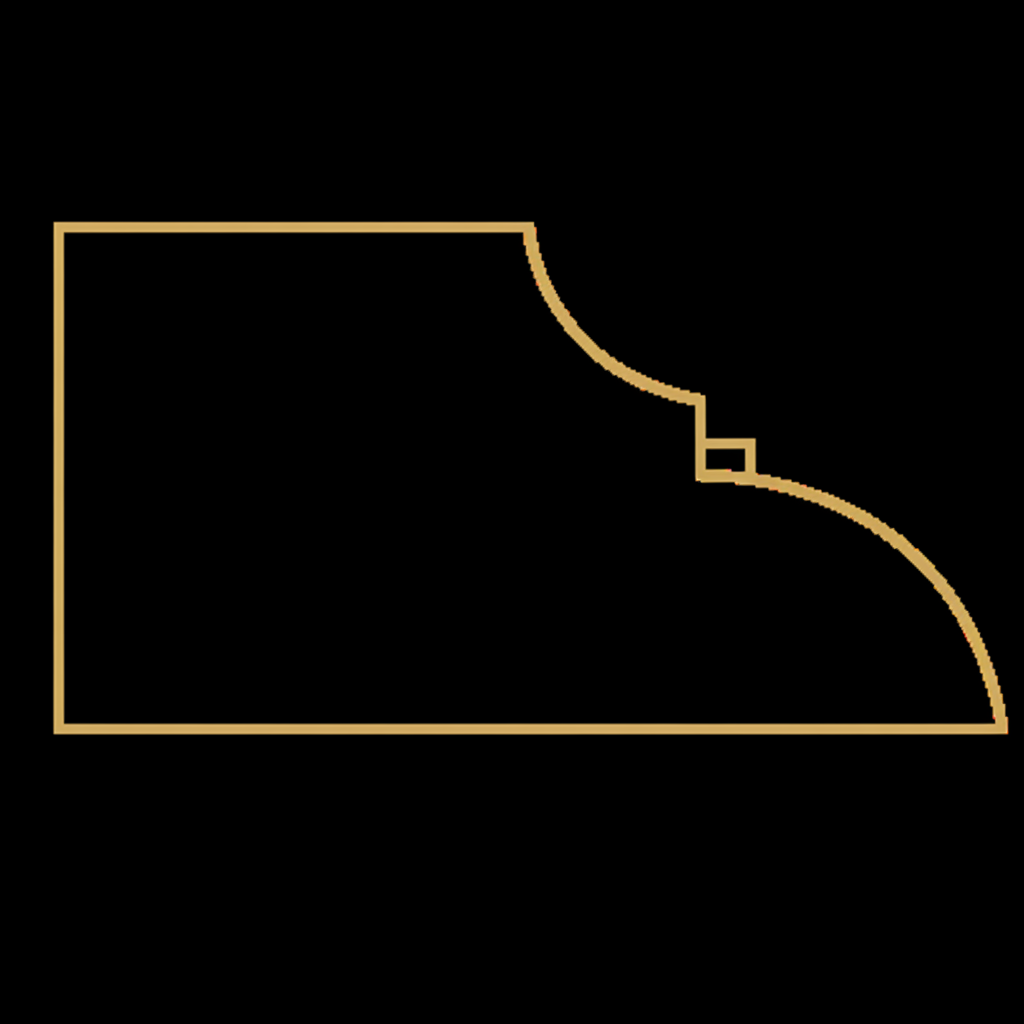
How to use this page. Browse by family below, or jump to a specific family using the table of contents. For each profile we include a cross-section diagram, a description of the visual character, and a note on when the profile is most appropriate. The diagrams show the slab in cross-section: the top of the diagram is the top face of the slab, the front (right side) is the visible edge, the bottom is the underside.
The reference profile. The simplest possible edge: a clean 90-degree cut, polished or honed, with no shaping. Everything else in this catalogue is a variation on this baseline.

The simplest profile: the stone is cut to a clean 90-degree edge and polished or honed. No carving, no shaping. The reference profile against which all others are variations.
Contemporary minimalist work. Floating shelves. Wall cladding where the edge is hidden. The default specification when no other profile is requested.

Bevels take a 45-degree cut from the top edge of the slab. The depth of the cut determines whether the bevel reads as a subtle softening or as an architectural feature in itself. Four variants in common use.
A 45-degree cut takes off the top corner at roughly one-quarter of the slab thickness. The smallest of the bevel family.
Subtle softening of an otherwise straight edge. Reduces the visual weight of the slab without becoming a feature in itself. Appropriate where the stone is the architectural element and the edge should not call attention.
The same 45-degree cut taken to roughly half the slab thickness. The bevel face becomes a meaningful design element.
Where the bevel should register as a deliberate detail. Reads as more architectural than the 1/4 bevel; the larger cut catches more light.
The bevel is cut on the underside of the slab front rather than the top. The top edge stays sharp; the bottom is softened.
Floating vanities and shelves where the underside is visible. The reverse bevel reduces the apparent thickness of the slab from below while preserving a crisp profile from above.
Both top and bottom front corners are bevelled at 45 degrees. The slab front face becomes a narrow band between the two cuts.
Contemporary specification where the bevels frame a defined edge band. Reads as deliberately constructed. Useful for islands and freestanding pieces where the edge is on display from multiple angles.
Radius profiles round the top front edge into a curve. The radius dimension determines how prominent the curve becomes. Suitable for any application where edge sharpness is a concern; foundational for child-safe and touch-frequent surfaces.
The top front corner is rounded with a 3/8-inch radius. The smallest of the radius family. Subtle softening without becoming a curve in itself.
Touch-friendly applications where the edge should not feel sharp. Bath vanities, kitchen islands at child height. The pragmatic minimum for any horizontal surface that hands will brush against routinely.
A larger 5/8-inch radius produces a more pronounced curve. The transition from top face to front face becomes a visible curve rather than a rounded corner.
Where the radius is meant to register as a design element. Slightly more generous on the hand. Common on kitchen islands and bath surrounds in projects that lean traditional.
Bullnose profiles take the curve further: the front edge becomes a half-circle the depth of the slab thickness. Single bullnose is the traditional reference; variants extend the curve to the underside, narrow it to a half-curve, or pair it with an undercut cove.
The full top front edge is rounded into a half-circle the depth of the slab thickness. The defining curve profile.
Traditional and transitional interiors. Bath vanities where the soft profile reads as warm and humanistic. Kitchen islands in homes with children where edge sharpness is a real concern.
The bullnose curve covers the top half of the slab thickness only; the bottom front face stays vertical.
Where the bullnose should be present but not dominant. Thinner slabs where a full bullnose would consume the entire edge. Contemporary applications that want softness without traditional reference.
Both top and bottom front edges are bullnosed. The front face of the slab disappears entirely into curves.
Pieces visible from above and below. Transition mouldings. Stair noses where the profile must read as soft from both vantages. Rare in residential cabinetry but useful in specific architectural moments.
A bullnose top with a concave cove undercut at the bottom. The edge reads soft on top, sculptural underneath.
Premium bath vanities where the underside is visible. Reception desks and built-in pieces in luxury commercial. Where the edge is meant to be a feature.
A concave curve cut into the top edge. Creates a subtle shadow line, the inverse of a bullnose. Restrained and elegant rather than soft.
Refined contemporary work where a quiet shadow detail is wanted at the edge. Often paired with cabinetry that already carries cove or radius detailing so the stone reads as part of a coordinated language.
The classical S-curve profile with two thousand years of architectural history. Ogee variants combine the flowing curve with a bullnose, a flush front, a reveal, or a step. The natural choice for traditional and transitional interiors.
An S-curve profile that flows from the top edge in and then back out. The classical ogee, defining detail of traditional architecture from Roman through Neoclassical.
Traditional and transitional interiors. Vanities and surrounds where classical reference is part of the design intent. Reads as deliberately historical when contemporary stone surfaces would feel jarring.
An ogee curve at the top transitioning into a bullnose at the front. Combines the classical reference of the ogee with the soft handfeel of the bullnose.
Premium traditional vanities and counters. Where both the ogee detail and the soft front edge are desired. More expensive to fabricate; specifies attention to detail.
The ogee profile is cut into the top of the slab but the front face stays flush vertical. The cut adds detail without changing the overall slab silhouette.
Where the ogee adds a refined detail that reads at close range without changing the slab's apparent thickness. Common in contemporary work that wants a moment of classical reference.
An ogee at the top with a reveal cut at the bottom of the front face. The reveal narrows the visible edge band, drawing attention to the ogee detail above it.
Showpiece pieces where the edge profile is meant to be read as a deliberate composition. Reception desks, hero vanities, freestanding stone furniture.
An ogee with a stepped detail underneath. The step adds a horizontal element to the otherwise flowing curve.
Architectural cornice work and crown details. Where the edge profile is meant to read as classical mouldings. Less common in contemporary residential but valuable in specific traditional contexts.
Stepped contemporary profiles. The Dupont edge is a stepped chamfer rather than a flowing curve, reading as deliberately constructed and architectural. Five variants combine the stepped detail with bullnoses, reveals, or repeated steps.
A stepped profile with a sharp 90-degree cut into the top of the slab front. The Dupont edge is a stepped chamfer rather than a curve.
Contemporary architectural specifications. Where the ogee classical reference is too traditional but a profile detail is still desired. Reads as constructed and deliberate.
A Dupont step at the top followed by a bullnose front. Combines the architectural step with the soft hand of a bullnose.
Where contemporary architectural reference is desired with hand-friendly edges. Premium kitchen islands and bath vanities.
The Dupont step cut into the top of the slab; the front face stays flush vertical. The step adds an architectural detail without changing the slab silhouette.
Most common Dupont specification. Adds a refined moment without committing to a more dramatic profile.
A Dupont step at the top combined with a reveal cut at the bottom of the front. Frames the slab edge between two architectural cuts.
Showpiece architectural specifications. Where the edge profile is read as a deliberate composition rather than a softening detail.
A double-stepped Dupont. The architectural step is repeated on the underside.
Reception desks and freestanding stone furniture where the edge is visible from above and below. Reads as the most constructed and architectural of the Dupont family.
Softer alternatives to the Dupont family. The Magna profile begins with a step but transitions through a curve rather than a sharp angle. Four variants in common use.
A small step at the top followed by a quarter-curve transition. The Magna profile is a softer alternative to the Dupont with a gentler step.
Where Dupont reads as too sharp but a stepped profile is still desired. Common in transitional residential.
Magna step transitioning to a bullnose front. The softest of the stepped profile family.
Traditional bath vanities and kitchen islands. The combination reads as warm and detailed.
The Magna step at the top with a flush vertical front face. Refined detail without changing the slab silhouette.
Contemporary applications that want a moment of softness without classical reference.
Magna step at the top, reveal at the bottom. The slab front face becomes a narrow band between the two profile elements.
Premium pieces where both top and bottom edges are intended to be read as deliberate.
Distinctive profiles outside the main families. The Double D mirrors a bullnose top to bottom; the V Groove cuts a decorative V into the top of the slab. Specialty profiles for specific design intents.
The full top front edge rounded into a half-circle, mirrored on the underside. Both top and bottom front faces are bullnosed identically.
Floating vanities and counters where the underside is visible. The symmetry reads as deliberate from any angle.
A V-shaped groove cut into the top of the slab near the front edge. The most decorative of the standard profiles.
Decorative kitchen island edges, traditional bath vanities, classical reference work. Less common in contemporary specification but useful where the profile is meant to be a feature.
Send us your project. We respond within one business day with profile recommendations based on the application, the stone, and the broader design intent.