A Warm Brown From Spanish Murcia
Emperador Dark forms from Tertiary limestone (about thirty to sixty million years old) deposited in shallow seas across what is now the Murcia region of southeastern Spain. The limestone underwent regional metamorphism during the Alpine orogeny that built the Betic mountain system. Iron oxide deposits during this metamorphism gave the stone its characteristic warm brown field; calcite intrusions along fault lines produced the white-and-cream veining.
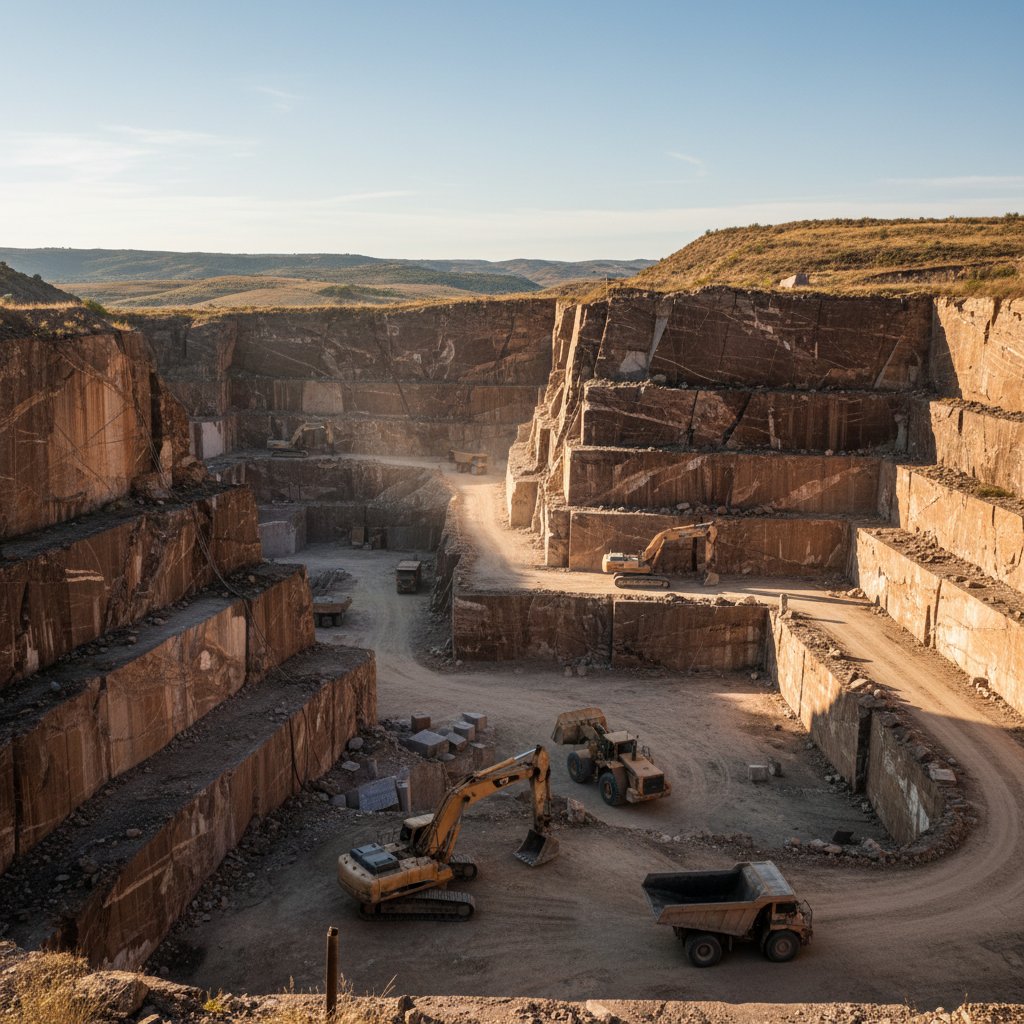
The active commercial quarries cluster around the towns of Yecla, Caravaca, and Calasparra in the Region of Murcia. Spain has a substantial stone industry overall (the country is one of the largest natural stone exporters in Europe) and Emperador Dark is one of the historically-traded named varietals from the Spanish portfolio. Production volume is moderate; the stone is widely available at standard grades and special-order at premium grades.
- Original rock: Limestone (sedimentary) from the Tertiary period, ~30-60M years old
- Metamorphism: Alpine orogeny pressure and heat
- Field colour: Warm brown to dark brown, from iron oxide content
- Veining: White and cream calcite
- Hardness: Mohs 3-4 (calcium carbonate, etches with acid)
- Sister Spanish marbles: Emperador Light, Crema Marfil (warm-tone Spanish family)
Emperador comes in several commercial grades distinguished by colour saturation and veining intensity. Emperador Dark (the focus of this piece) is the deepest brown variant. Emperador Light is a lighter brown with similar veining patterns, sometimes specified for projects where the dark brown reads as too saturated. Emperador Brown sits between the two grades. The choice between them is a design choice rather than a quality judgement; all three grades come from the same regional quarries and have similar practical performance.
Spanish Royal Stone, American Mid-Century Revival
Emperador Dark has been quarried in the Spanish Murcia region since at least the medieval period. The stone was used in Spanish royal architecture from the late Middle Ages forward; the Reales Alcázares of Seville (a Mudéjar palace complex with continuous use from the eleventh century) incorporates Spanish dark marbles in select royal chambers. The Royal Palace of Madrid (1738-1764) specifies Emperador-family stones in formal rooms alongside Italian marbles. Through the eighteenth and nineteenth centuries the stone was a Spanish architectural staple, mostly contained within Iberian use.
The American mid-century moment for Emperador Dark arrived in the 1950s and 1960s, when the warm-tone luxury palette of post-war American interior design embraced brown materials enthusiastically. Emperador Dark appeared in luxury hotel lobbies (the Pierre, the Plaza, various Beverly Hills hotels), executive office floors, and the residential commissions of designers like Dorothy Draper and Billy Baldwin. The stone was a defining material of a particular flavour of post-war American luxury: warm, decorated, formal, slightly heavy. When American design pivoted away from those values toward cooler minimalism in the 1970s and 1980s, Emperador Dark went out of fashion and stayed there for nearly forty years.
The contemporary revival began around 2018-2020 alongside the broader return-to-warm trend in luxury interiors. After more than a decade of cool grey and white-on-white modernism, designers began specifying warm materials again, and the brown marbles came back into circulation. Vincent Van Duysen, Pierre Yovanovitch, Kelly Wearstler, and several New York and Los Angeles luxury residential firms began using Emperador Dark in residential projects. By 2023 the stone was appearing in design press regularly. The current moment for the stone is a contemporary revival of the mid-century specification, but with restraint that the original era usually lacked.
Royal Palaces and Mid-Century Hotels
Emperador Dark has a longer architectural history than its current contemporary moment would suggest. A short list of works that defined the stone's reputation:
- The Royal Palace of Madrid (1738-1764). Spanish dark marbles including the Emperador family appear in formal royal rooms alongside Italian Carrara.
- The Reales Alcázares of Seville (medieval to Renaissance). The Mudéjar palace complex incorporates Spanish dark marbles in royal chambers added across centuries.
- The Pierre Hotel, New York (1930). The Schultze and Weaver design used Emperador Dark in lobby and ballroom finishes; the stone became identified with American mid-century luxury hospitality.
- Various Dorothy Draper and Billy Baldwin residential commissions (1950s-1960s). Both designers used Emperador Dark consistently as a warm dramatic stone in their luxury residential work.
- Vincent Van Duysen residential, multiple locations (2020-present). The Belgian architect's contemporary revival of the stone for warm minimalist residential interiors.
- Pierre Yovanovitch residential, France and US (2021-present). Yovanovitch has done more than any current designer to bring Emperador Dark back into design press circulation.
Among living designers, the contemporary figures most consistently identified with the stone are Vincent Van Duysen, Pierre Yovanovitch (the most prominent current specifier), Kelly Wearstler, and in Toronto Yabu Pushelberg, who have specified Emperador in several recent hospitality projects.
The Warm Brown Field
Emperador Dark's defining visual signature is its warm brown field with white-and-cream veining. The brown is genuinely deep, ranging from a medium chocolate to an almost black-brown depending on the slab. The veining is calcite, generally narrower and more linear than the cloud-veining of the Italian marbles. The overall character reads as warm and architectural rather than dramatic; the stone has the colour saturation of a deeply pigmented finish but the depth and character of natural stone.
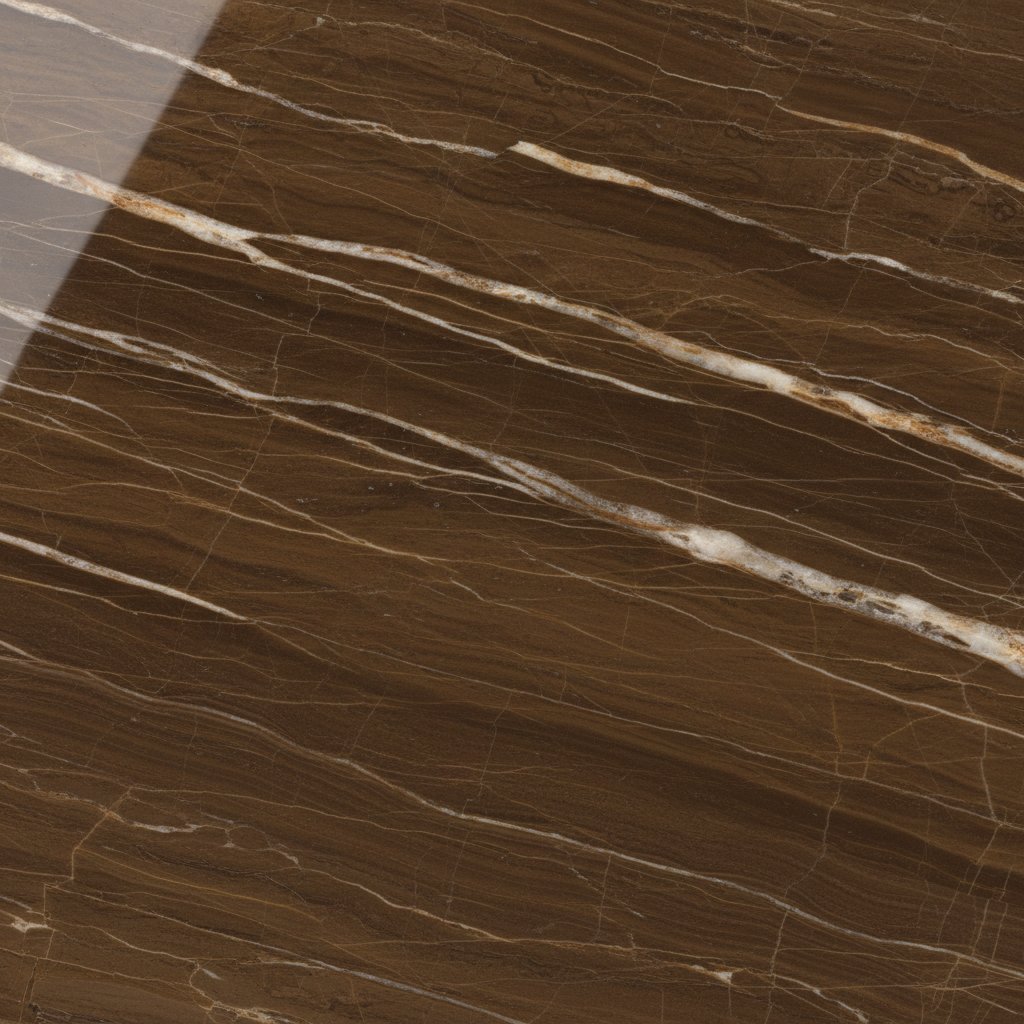
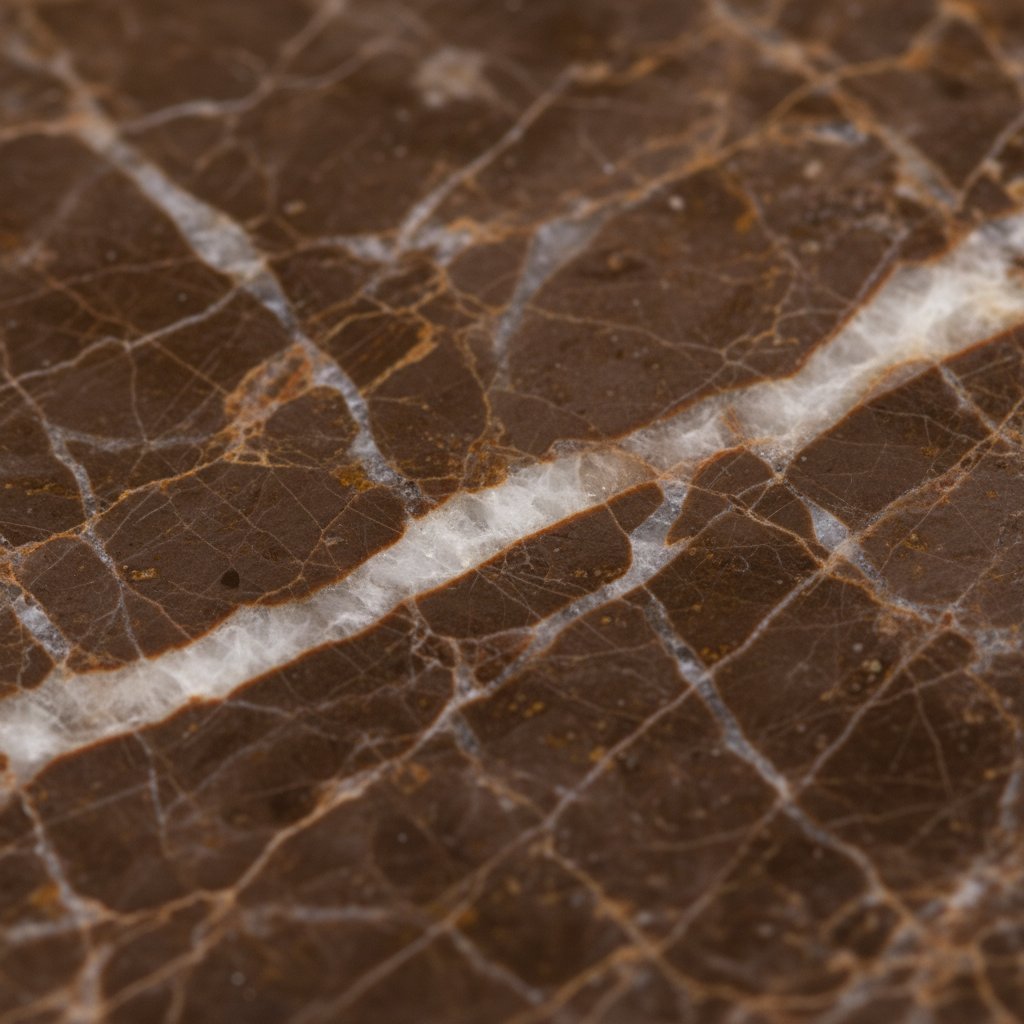
Slab variation within Emperador Dark is meaningful. Some pieces have abundant white veining and read as more graphically active; others have sparse veining and read as nearly monochrome warm brown. The premium grades have the most consistent saturation. For applications where the stone is meant to read as an architectural neutral (a long counter, a full-wall cladding installation), specification of the lower-veining grades is usually preferable. For applications where the stone is the design statement (a hero vanity, a dramatic fireplace surround), the higher-veining grades carry more visual energy.
Polished Tradition, Honed Contemporary
Emperador Dark accepts the same finish treatments as the other calcium carbonate marbles. The historical mid-century specification was almost always polished; the contemporary revival skews toward honed and leathered.
Polished brings the warm brown to maximum saturation and depth. The reflective surface deepens the brown toward an almost mahogany register and sharpens the white veining for graphic contrast. Polished Emperador Dark is the historical mid-century luxury finish and reads as formal and traditional in contemporary use. It works in classical interiors and in commercial hospitality where the more reflective surface is desired.
Honed takes the surface to a soft matte that softens the brown into a warmer, more tactile register. The white veining recedes into a gentler ghost. Honed Emperador Dark is the contemporary residential specification of choice. Vincent Van Duysen, Pierre Yovanovitch, and most current high-end residential specifications use the honed finish; it pairs more naturally with the matte plasters and warm woods that define contemporary warm-tone luxury.
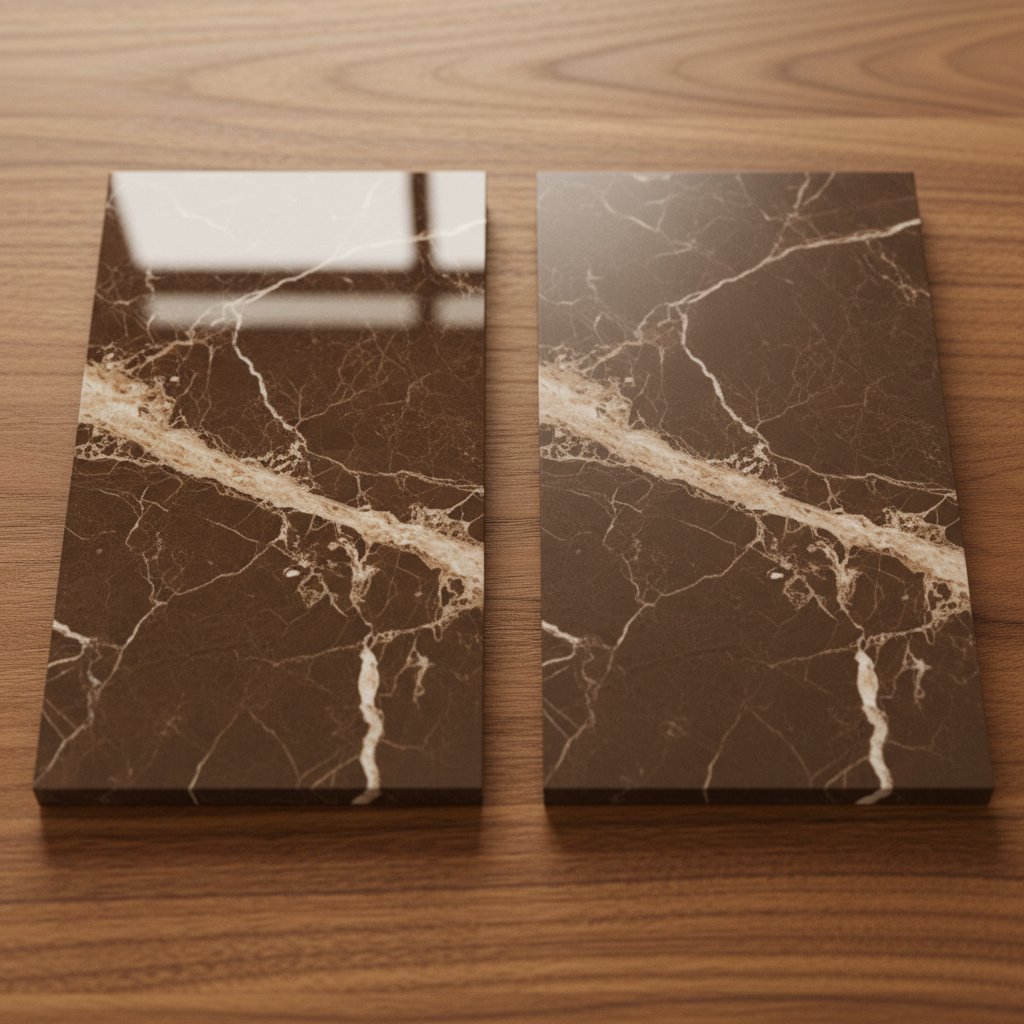
Leathered introduces tactile texture. On Emperador Dark the leathering reads particularly well because the warm brown field is forgiving of subtle texture variation. Leathered Emperador Dark is excellent for kitchen islands and bath counters where the touch quality is part of the experience.
Brushed creates more pronounced texture. Used mostly for industrial-luxury or exterior applications.
The Forgiving Brown
Emperador Dark is calcium carbonate, which means the etching-from-acid concerns that affect the other calcium carbonate marbles apply here. Lemon, vinegar, wine, tomato, and acidic cleaners create matte spots on polished or honed surfaces. As with the dark marbles generally, Emperador Dark hides etching better than light marbles; the saturated brown field absorbs minor etching into its visual range without the dramatic contrast that etches show on white surfaces.
The warm tone has a practical advantage for kitchens that the cooler dark stones do not share: cooking spills (oils, sauces, juices) read against a warm brown field as continuous rather than as anomalies. A brown stain on a polished Emperador Dark surface is only a problem if it accumulates; the everyday spills that would be immediately visible on a Carrara surface tend to disappear into the field on Emperador Dark.
Emperador Dark works in:
- Kitchens. Particularly islands and counters with active cooking. The honed or leathered finish is most forgiving.
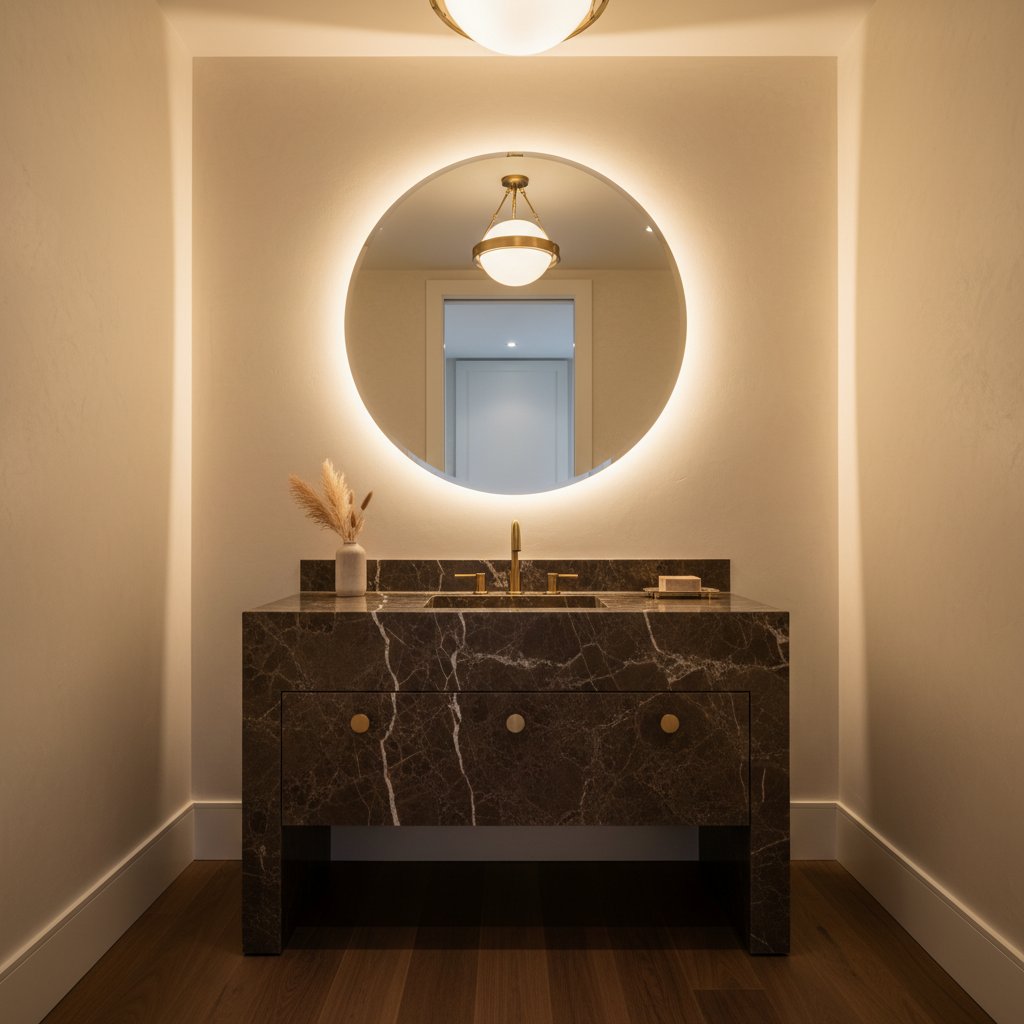
- Bath vanities, sinks, freestanding tubs. Polished for traditional drama, honed for contemporary calm.
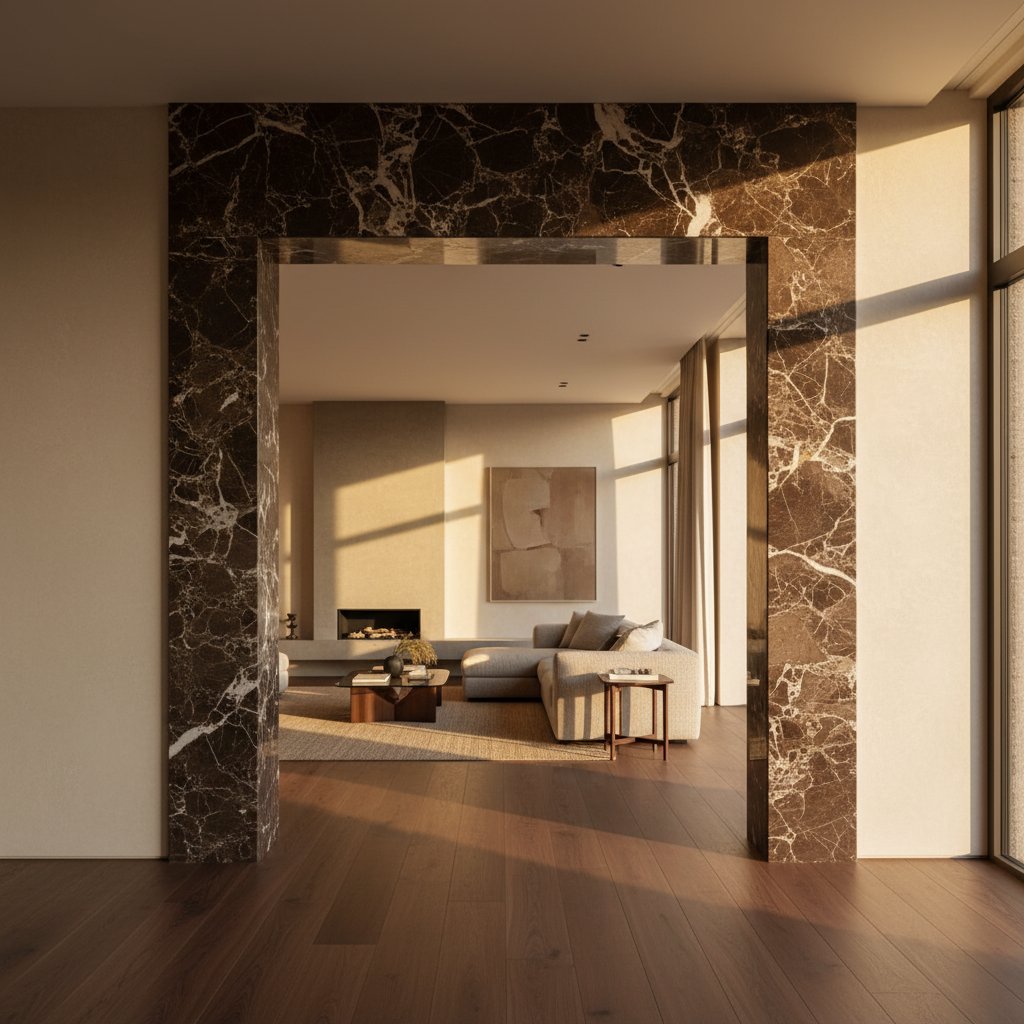
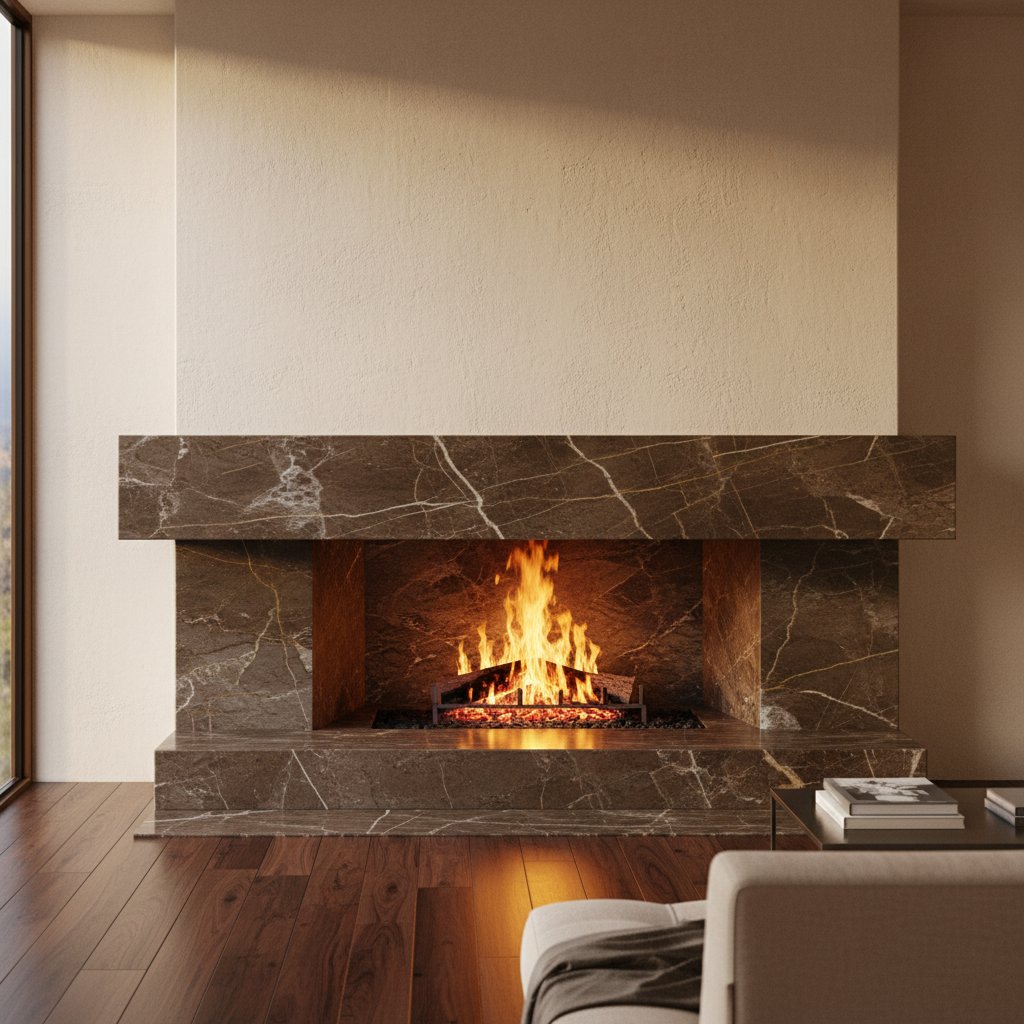
- Cased openings, fireplace surrounds, door surrounds. Particularly effective when the surrounding palette is warm.
- Wall cladding, particularly bookmatched feature walls. The warm brown takes bookmatching beautifully.
- Floors in formal rooms. Historically a common use; less common in contemporary residential.
Sealing. Same protocol as the other calcium carbonate marbles: penetrating sealer at fabrication, re-sealing every twelve to eighteen months.
Pricing. Pietra pricing varies by stone grade, profile complexity, and project scope. Send your project for a firm quote within one business day.
The Warm Family
Emperador Dark belongs to the warm-tone family of luxury stones and pairs strongest with materials that share its warm register. The contemporary specifications that have brought the stone back into design press circulation over the past five years almost universally use this warm-on-warm logic.
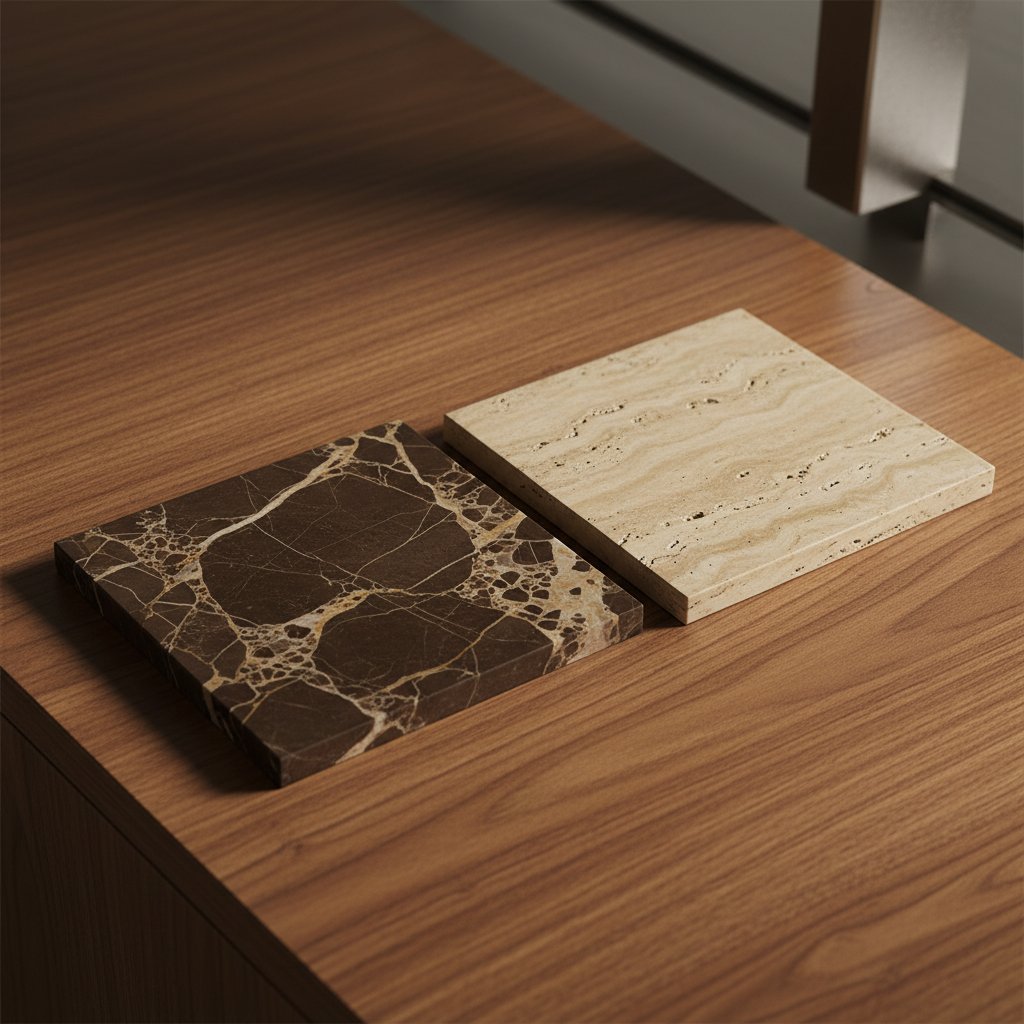
Travertino Romano. The strongest contemporary pairing. The deep brown of the Emperador and the warm cream of the travertine share a tonal language; pairing them across surfaces in the same room (an Emperador vanity above a travertine floor; a travertine fireplace surround opposite an Emperador feature wall) creates a layered warm composition that reads as deeply intentional.
Calacatta Gold. The bright contrast partner. The white field of Calacatta Gold provides cool counterpoint to the warm Emperador while the gold veining of the Calacatta extends the warm tonal note. Used together the two stones produce a layered warm-and-cool composition.
Brushed brass and aged bronze. Essential. The warm metal tones extend the warm vocabulary established by the stone. Cool metals (chrome, polished nickel, stainless steel) compete with the warmth and rarely work well.
Materials Emperador Dark always works with
- Walnut, smoked oak, and warm dark woods. Tonal continuity with the warm brown field of the stone.
- Lime plaster in cream, warm putty, or terracotta tones. Warm matte surfaces that complement the polished or honed stone.
- Brushed brass hardware and fixtures. Faucets, cabinet pulls, picture lights, switch plates: all should lean warm.
- Linen and warm cream textiles. Linen, mohair, boucle in cream and oatmeal tones balance the warm stone.
- Saddle leather and tan upholstery. The tan extends the warm-tone vocabulary into seating and millwork accents.
What to be careful with
Emperador Dark can read as too warm in spaces with no cool counterpoint. Pairing it with red and orange textiles, warm yellow lighting, terracotta floors, and warm wood furniture all at once tends to produce an oppressively warm reading. The remedy is to introduce one cool element: a cool grey textile, a piece of darker stone, a metal fixture in a cooler tone. The cool note prevents the warmth from becoming overwhelming.
For the bath
For an Emperador Dark vanity in a powder room or primary bath, the surrounding palette wants to be warm and quiet. Cream plaster walls, brushed brass faucets, walnut shelving, soft warm lighting. Cool elements (chrome, white tile, cool grey paint) tend to fight the stone rather than complement it.