The Carnia Region of Friuli
Grigio Carnico is quarried in the Carnia region of the Friulian Alps in northeastern Italy. The deposits are part of the larger Dolomites geological province and formed from limestone metamorphosed during the Alpine orogeny. The warm grey colour comes from organic carbon and trace iron content in the original limestone.
The white veining is the result of calcite recrystallisation along fault lines during metamorphism. The contrast between the warm grey field and the bright white veins gives the stone its characteristic look. The deposits have been worked since Roman times, though large-scale commercial extraction dates from the nineteenth century.
- Origin: Carnia, Friuli, northeastern Italy
- Composition: Calcite marble
- Tone: Warm grey with brown undertones
- Veining: Bright white in flowing patterns
- Character: Sophisticated, warm, classical
A Venetian Stone
Grigio Carnico has a strong association with Venetian architecture, particularly with the Palladian tradition. The stone appears in palazzo interiors throughout the Veneto and was a favoured material for fireplace surrounds, stair landings, and floor inlays in seventeenth and eighteenth century Venetian work.
It has been overshadowed in international markets by the more famous Italian whites and blacks, but among European designers it remains a respected choice for projects that want a warm grey marble with classical authority.
Venetian Palladian Tradition to Contemporary Italian Practice
Grigio Carnico comes from the Carnic Alps in the Veneto region of northern Italy, near the Venetian sphere of influence. The stone appears in Venetian Palladian palazzos from the sixteenth century onward, where its warm grey tone balanced the city's white and pink marbles. The Veneto's architectural tradition, which runs from Palladio through the Neoclassical period, favoured warm grey marbles for interior architectural elements where a neutral but warm tone was desired.
In contemporary Italian architecture and design, Grigio Carnico has experienced a subtle revival among designers working in what might be called "warm minimalism." Rather than the cool greys of Northern European minimalism or the pure whites of strict contemporary design, contemporary Italian practitioners favour warm greys that suggest classical tradition while reading as modern. The stone appears in renovations of Venetian palazzos and in new construction across the Veneto that wants to reference the regional tradition.
In luxury hospitality design across Europe, Grigio Carnico has become increasingly favoured as designers seek alternatives to the ubiquitous cool greys. Its warm undertone reads as more welcoming than cooler grey marbles, and its association with Venetian classicism appeals to designers working in refined, traditionally influenced interiors. Contemporary hotel renovations in Italy, Austria, and Switzerland feature it increasingly.
In North America, Grigio Carnico appeals to designers working in transitional or classically influenced contemporary styles. It bridges the gap between the cool greys that read as stark and the warm creams that read as traditional. In Toronto residential design, it has become a sophisticated choice for clients who want grey but prefer warmth to coolness.
The Warm Grey Field
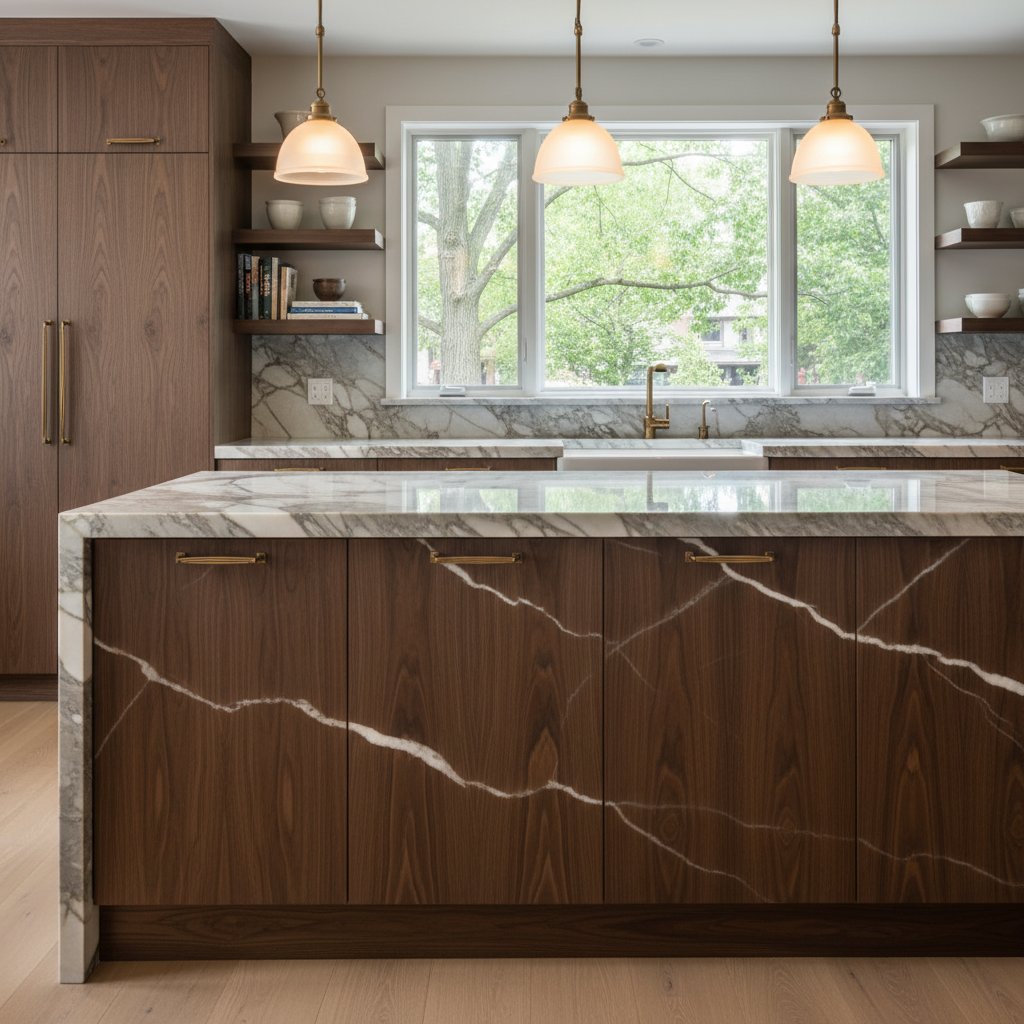
Grigio Carnico reads as a warm grey surface with bright white veining. The grey carries a subtle brown undertone that distinguishes it from cooler grey marbles like Bardiglio Imperiale or Pietra Grey. The veining flows in irregular patterns rather than running in linear bands, which gives the stone organic character.
Slabs vary in vein density. Some carry heavy white veining that reads almost as a feature stone, others are quieter with sparse veins. We recommend selecting slabs in person for any visible installation.
Polished, Honed, Leathered
Polished Grigio Carnico is the standard. The polish brings out the warm undertone and creates strong contrast with the white veining. Honed Grigio Carnico reads softer and more uniform. Leathered Grigio Carnico works particularly well for kitchen counters because the textured surface masks etching and adds subtle visual depth.
Living With Grigio Carnico
Grigio Carnico is a calcite marble and will etch on contact with acids. The warm grey field hides minor etching better than a brilliant white would, which makes the stone relatively forgiving for kitchen use. For high-use applications we recommend honed or leathered finish.
Sealing should be done at installation and refreshed every two to three years. The warm undertone takes sealer well without showing film.
What Goes With Grigio Carnico
Grigio Carnico pairs beautifully with warm woods (walnut, white oak in clear or warm finish), with aged brass and bronze, and with cream-toned plaster walls. The warm undertone of the stone fights against cool whites and reads better against soft creams or muted greens.
The stone also works well in monochromatic grey schemes, where the warm undertone provides relief against cooler greys in tile, paint, and upholstery.