The Estremoz Anticline
Rosa Portogallo is quarried in the Estremoz region of southern Portugal, in the Alentejo. The deposits sit along a geological feature known as the Estremoz Anticline, which has produced Portuguese marbles for more than two thousand years. The pink colour comes from manganese and iron content in the original limestone before metamorphism.
The grey veining flows through the field in irregular patterns, the result of clay and graphite impurities concentrated along structural planes during metamorphism. The Portuguese stone industry classifies the material into several commercial grades by tonal uniformity and vein density.
- Origin: Estremoz, Alentejo, Portugal
- Composition: Calcite marble
- Tone: Soft pink-rose
- Veining: Grey flowing patterns
- Character: Romantic, warm, quiet
The Portuguese Pink Tradition
Portuguese pink marbles have been quarried since Roman times. The Estremoz region produced material for Roman buildings across the Iberian peninsula, and the quarries remained active throughout the medieval and early modern periods. The Portuguese royal palaces use Rosa Portogallo extensively for floors, columns, and decorative elements.
Modern commercial extraction expanded in the twentieth century, and Portuguese pink marbles now appear in luxury residential and hospitality interiors worldwide. They have benefited from a contemporary revival of interest in coloured marbles after decades of preference for the cool whites.
Portuguese Royal Tradition to Iberian Hospitality
Rosa Portogallo is quarried from Portugal and appears in Portuguese royal palaces including the Palacio da Pena near Lisbon and the royal residences at Queluz. The warm pink tone established it as the marble of Portuguese royal taste during the eighteenth and nineteenth centuries. The stone's gentle warmth and its quiet grey veining made it ideal for grand interiors where refinement and femininity were desired design qualities.
Throughout Iberia, Rosa Portogallo appears in ecclesiastical and domestic architecture from the Renaissance onward. The stone has a particular association with Portuguese convents and monasteries, where its soft warmth was believed to read as spiritually welcoming. Portuguese and Spanish estates built during the colonial era often featured Rosa Portogallo as a domestic cladding stone, bringing a touch of metropolitan refinement to far-flung properties.
In contemporary practice, Rosa Portogallo has seen a subtle renaissance in luxury hospitality design, particularly in European resort and hotel properties where the stone's warmth and quiet sophistication align with contemporary concepts of refined relaxation. Spa and bathroom installations across Portugal and Spain increasingly favour it. The stone appeals to contemporary designers looking for alternatives to the cooler pinks and whites that have dominated recent trends.
In residential design, Rosa Portogallo is rediscovered periodically by designers comfortable with warm, historically referenced palettes. It appears most often in master bathrooms and in kitchen islands in homes where the surrounding architecture permits a confident colour statement. In Toronto and across Canada, it appeals to clients and architects drawn to Portuguese or Mediterranean design traditions and to those seeking a stone that reads as warm without being obvious.
The Pink Field
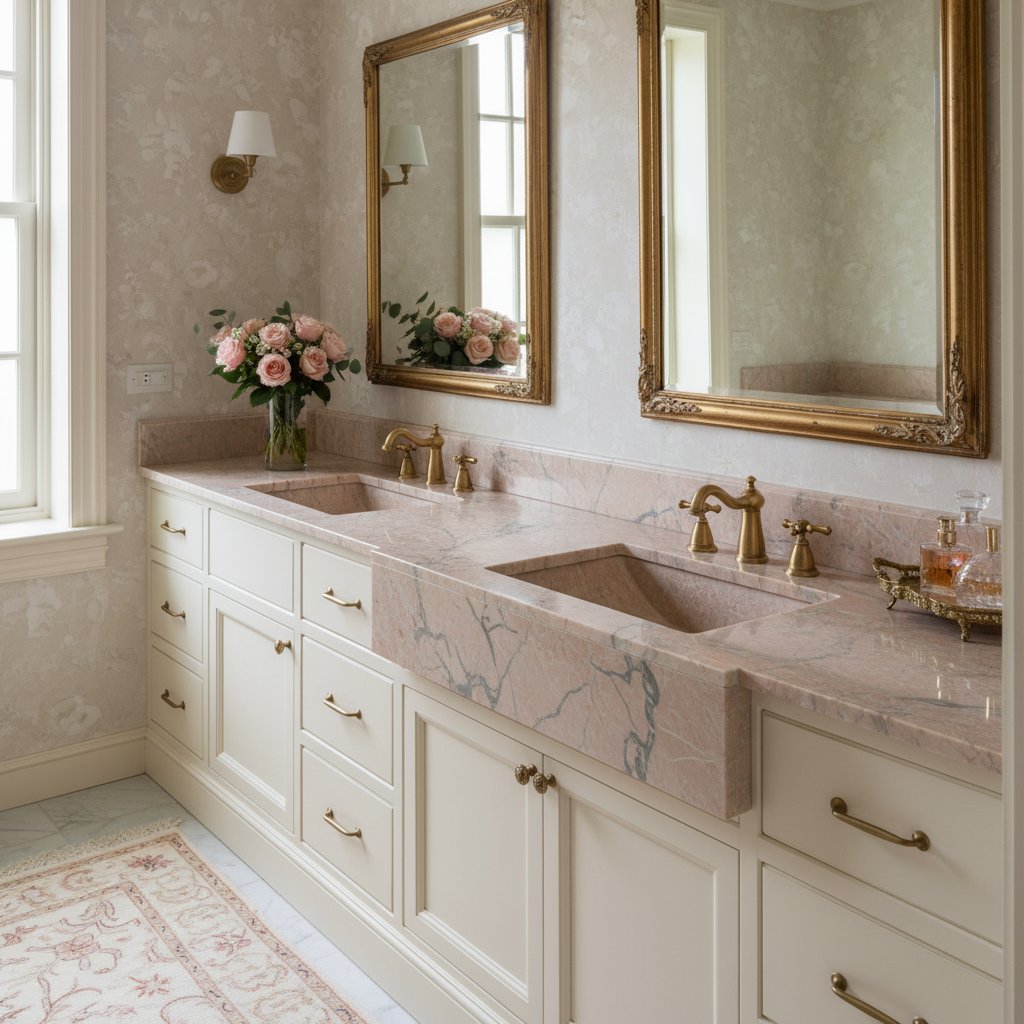
Rosa Portogallo reads as a warm pink-rose surface with quiet grey veining. The pink is soft enough to read as warm and architectural rather than juvenile, and the grey veining provides visual rhythm without ever competing with the field. The stone has a distinctly feminine quality without being precious.
Slabs vary in pink saturation. Some carry a deeper rose tone, others read almost peach. Selection matters because the colour effect changes substantially with saturation. We recommend visiting a slab yard for any visible installation.
Polished, Honed, Leathered
Polished Rosa Portogallo brings out the warmth and saturation of the pink. Honed Rosa Portogallo reads softer and slightly more muted, which can be a more sophisticated choice for understated schemes. Leathered Rosa Portogallo is uncommon but produces a beautiful tactile surface for kitchen counters and floors.
Living With Rosa Portogallo
Rosa Portogallo is a calcite marble and will etch on contact with acids. The warm field hides minor etching reasonably well, and the soft pattern of veining helps draw the eye away from any defects. For kitchen counters we recommend honed finish for clients who plan to cook seriously.
Sealing at installation and every two to three years thereafter is standard. The pink field takes sealer well and resists film.
What Goes With Rosa Portogallo
Rosa Portogallo pairs beautifully with rift-cut white oak, with unlacquered brass and aged bronze, and with cream-toned millwork. The pink field works particularly well against natural plaster and lime-washed walls.
For tile pairings, hand-glazed cream or warm-white zellige reads beautifully against the pink. We avoid pairing the stone with bright blues or cool greys, which fight against the warm undertone. Rosa Portogallo is at its best in warm, layered schemes where the pink can register as one element in a larger composition.